

Decoding the mushroom supplement trend for wellness
Mushroom supplements have moved from health food shops to supermarket shelves, gym bags, and morning routines at remarkable speed. Yet for every credible study on lion’s mane or reishi, there are ten products making claims that stretch well beyond what the evidence supports. If you have ever stood in a shop aisle wondering whether the adaptogenic blend in your hand is genuinely worth it, or scrolled through conflicting reviews trying to work out who to believe, you are not alone. This guide cuts through the noise with a clear, evidence-led look at what mushroom supplements can and cannot do, and how to buy them without being misled.
Table of Contents
- Why mushroom supplements went mainstream
- What the science really says about mushroom benefits
- How to spot quality: buying mushroom supplements the smart way
- What you need to know about supplement regulation and safety
- The uncomfortable truth most people miss about mushroom supplements
- Explore quality mushroom supplements for your wellness goals
- Frequently asked questions
Key Takeaways
| Point | Details |
|---|---|
| Mainstream momentum | Mushroom supplements shifted from niche to mainstream as consumers prioritise evidence and transparency. |
| Evidence is nuanced | Scientific results for cognition and stress vary; benefits depend on product quality and personal context. |
| Smart buying essentials | Always check for species identification, extraction methods, and third-party COA when selecting supplements. |
| Regulation is light | Supplements are not pre-approved—responsibility for safety and label accuracy rests with the manufacturer. |
| Quality beats hype | Choosing standardised, batch-tested mushroom supplements gives you the best chance for positive outcomes. |
Why mushroom supplements went mainstream
With these questions in mind, let’s begin by looking at why mushroom supplements have become so visible on shelves and in lifestyles everywhere.
The shift did not happen overnight. For years, functional mushrooms sat firmly in the territory of specialist herbalists, traditional Chinese medicine practitioners, and a small community of biohackers. What changed is a combination of consumer fatigue with stimulant-heavy products, growing interest in adaptogens (natural compounds that help the body manage stress), and a broader cultural move toward preventative wellness.
By 2025 and into 2026, the category had crossed a significant threshold. The mushroom supplement trend shifted from niche adoption to mainstream retail, with consumers demanding products that are simplified and scientifically validated. That is a meaningful shift. It means buyers are no longer satisfied with vague claims about “ancient wisdom.” They want species names on labels, extraction ratios, and evidence.
The specific use cases driving this growth are worth noting. Market growth in 2025 and 2026 is being framed around standardised functional mushroom ingredients aimed at cognitive support, immune function, and active lifestyle performance. These are not fringe concerns. They map directly onto what most people using these products are actually trying to address: sharper focus at work, better stress management, and resilience during periods of high demand.
What educated buyers now prioritise when selecting products:
- Species identification: knowing exactly which mushroom is in the product, not just a generic “mushroom blend”
- Part of the mushroom used: fruiting body versus mycelium matters for bioactive content
- Extraction method: hot water, dual extraction, or raw powder each yield different compound profiles
- Standardisation: confirmation that key bioactives like beta-glucans are present at meaningful levels
- Third-party verification: independent testing that confirms what the label states
You can explore the range of medicinal mushroom powders available today to see how this transparency is being applied in practice. The bar has genuinely risen, and products that do not meet these expectations are losing ground to those that do. For a broader view of where functional mushrooms sit among top 2026 health supplements, the category is consistently ranked among the fastest-growing segments in functional nutrition.
What the science really says about mushroom benefits
Now that you see what’s driving the trend, let’s examine what the scientific research says about the real benefits claimed.
Lion’s mane (Hericium erinaceus) is the most studied mushroom for cognitive health, and it is also the most frequently cited in marketing copy. The honest picture is more nuanced than most product pages suggest. Neurocognitive claims for lion’s mane are supported by some human evidence, but results are mixed depending on study design, dose, population, and the specific outcomes being measured.

This is not a reason to dismiss the research. It is a reason to read it carefully.
| Study type | Typical findings | Limitations |
|---|---|---|
| Chronic supplementation (8+ weeks) | Some improvements in memory, mood, and attention | Small sample sizes, varied doses |
| Acute single-dose trials | Limited or no global cognitive effect | Short window may miss cumulative benefit |
| Mood and stress outcomes | Subjective improvements reported in some trials | Placebo effects are difficult to rule out |
| Immune function markers | Positive signals in several trials | Mostly preclinical or short-duration human studies |
One important distinction that rarely makes it onto product labels is the difference between acute and chronic effects. Acute supplementation trials may fail to show global cognitive effects even when specific domains like visual attention show signals. This tells you something practical: if you take a lion’s mane supplement for three days and feel nothing, that is not necessarily evidence the product does not work. The more relevant question is what happens over eight to twelve weeks of consistent use.
“The direction of effect in mushroom supplement trials often depends on standardisation, study duration, and participant selection. Expecting rapid, universal results from a single product is a mismatch with how the evidence actually reads.”
Pro Tip: When reviewing a product’s efficacy claims, look for whether the cited study used a standardised extract or a raw powder. The bioactive concentration can differ significantly between the two, and many positive trial results come from standardised extracts that are not always what you find in cheaper products.
For a deeper look at the lion’s mane evidence base and how it applies to specific formulations, it helps to cross-reference product sourcing with the study parameters. The supplement evidence guide offers a useful framework for evaluating these claims across categories.
How to spot quality: buying mushroom supplements the smart way
Understanding the evidence is vital, but how do you avoid getting duped by clever marketing? This next section is your toolkit for making smart supplement choices.
The supplement market is largely self-regulated, which means the burden of verification falls on you as the buyer. That sounds daunting, but in practice it comes down to a handful of concrete checks that take less than two minutes per product.
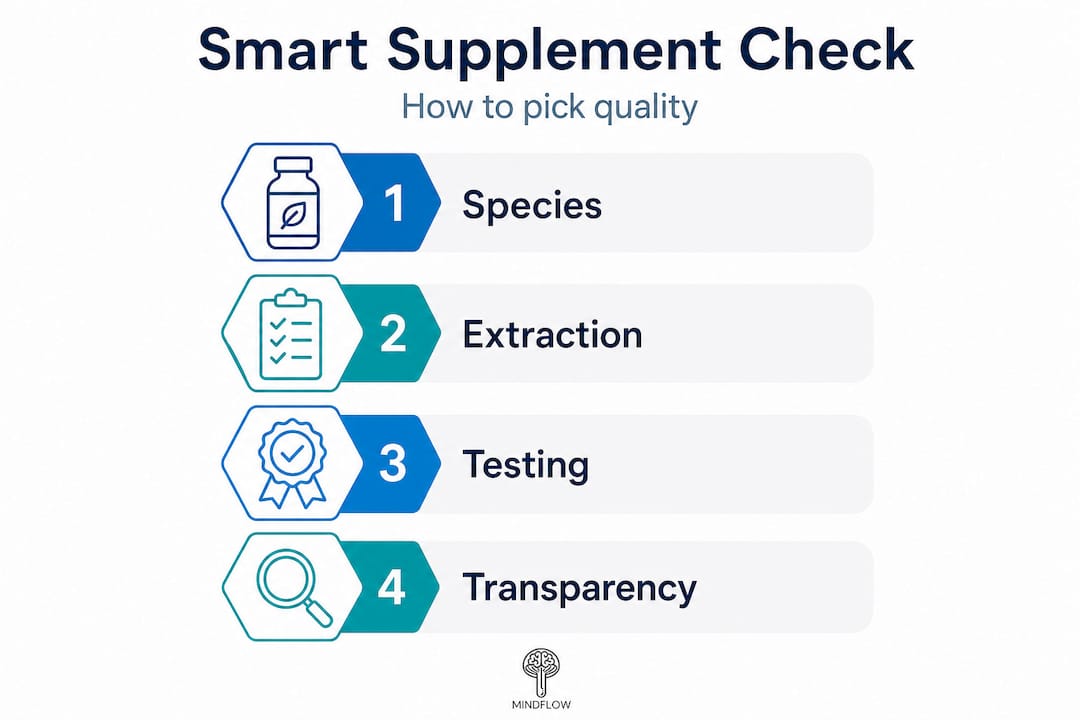
Quality benchmarks for mushroom supplements now include species and part identification, extraction method, and third-party testing via Certificates of Analysis (COAs), rather than relying on marketing claims alone. This is the framework that separates informed buyers from those who end up with overpriced mycelium powder on grain substrate.
Step-by-step quality check:
- Confirm the species and part: The label should state the exact species (e.g., Hericium erinaceus for lion’s mane) and whether the fruiting body, mycelium, or both are used. Fruiting bodies generally contain higher concentrations of key bioactives.
- Check the extraction method: Hot water extraction is standard for polysaccharides and beta-glucans. Dual extraction (water plus alcohol) is used for products targeting both water-soluble and fat-soluble compounds. Raw powders are less processed but may deliver lower bioactive levels.
- Look for standardisation data: A quality product will state the percentage of beta-glucans or other key compounds per serving. If this is absent, the product may not contain meaningful levels of what you are paying for.
- Request or find the COA: A Certificate of Analysis is a batch-specific document from an independent laboratory confirming that the product contains what it claims and is free from contaminants such as heavy metals or pesticides. Reputable brands make these accessible.
- Avoid vague proprietary blends: If a label lists a “mushroom complex” without individual species amounts, you have no way of knowing whether any single ingredient is present at a dose that matches the research.
| Quality indicator | Good sign | Red flag |
|---|---|---|
| Species listed | Full Latin name, part specified | “Mushroom blend” with no detail |
| Bioactive content | Beta-glucan % stated per serving | No standardisation information |
| Testing | Batch-specific COA available | “Tested” with no documentation |
| Extraction | Method clearly described | No extraction information |
| Dosage | Matches study-relevant ranges | Undisclosed or very low amounts |
Pro Tip: Before buying, search the brand name alongside “COA” or “third-party testing.” Brands that are serious about quality make these documents easy to find. If a ten-minute search turns up nothing, that tells you something important.
For practical guidance on format-specific choices, the mushroom coffee buying tips page covers what to look for when choosing blended products. The supplement selection guide also provides a category-agnostic framework for applying these checks across different product types.
What you need to know about supplement regulation and safety
Even when you understand what to look for, regulation is another maze. Here’s what’s really happening behind the scenes, and what it means for trusting what you buy.
The regulatory landscape for dietary supplements in the United States, and to a similar extent in many other markets, is fundamentally different from the framework governing pharmaceutical drugs. There is no pre-market FDA approval of supplement formulations. The FDA acts after a product is already on the market if problems emerge, rather than reviewing it before sale. This means manufacturers are responsible for the accuracy of their labels and the safety of their products.
This is not a scandal. It is simply the system as it stands, and understanding it helps you make better decisions.
What this means in practice:
- A product can legally carry health-adjacent language without clinical trial data
- Label claims are the manufacturer’s responsibility, not a regulatory guarantee
- Post-market enforcement only happens when problems are reported or detected
- Good Manufacturing Practice (GMP) compliance is a meaningful quality signal, as it reflects adherence to production standards
“Because supplements are not pre-approved for efficacy, the practical verification tools available to consumers are GMP certification, third-party COAs, and label transparency. These are not optional extras; they are the foundation of any trustworthy product.”
When assessing mushroom blend safety, look for GMP-certified production facilities, clear allergen and contraindication information, and accessible batch-level testing data. Products that provide all three are operating to a standard that goes well beyond the regulatory minimum.
The supplement safety workflows resource outlines how responsible brands integrate safety checks at every stage of production, which is a useful benchmark for evaluating what you are buying.
The uncomfortable truth most people miss about mushroom supplements
Now let’s step back and take a brutally honest look at what actually matters for results, and where most people go wrong on their mushroom journey.
Most disappointment with mushroom supplements comes from a mismatch between expectation and reality. Someone reads about lion’s mane supporting neurogenesis, buys the cheapest product they can find, takes it for a week, and concludes that the whole category is overhyped. That conclusion is understandable but not accurate.
The real issue is product selection. Because supplements are not pre-approved for efficacy, the direction of any effect depends heavily on standardisation, study duration, and how well the product matches the population studied in the trials. A raw mycelium powder on grain substrate is not the same product as a standardised hot-water extract of the fruiting body. Treating them as equivalent because both say “lion’s mane” on the label is where most people go wrong.
There is also a tendency to chase single-ingredient solutions for complex problems. Chronic stress, for example, involves sleep quality, cortisol regulation, lifestyle factors, and cognitive load. A mushroom supplement can be a genuinely useful part of addressing that picture, but it is unlikely to resolve it alone. The most consistent real-world results come from people who use well-formulated, standardised products as part of a broader approach to recovery and performance, not as a standalone fix.
What actually works is matching the product to the evidence and your specific context. If focus and cognitive resilience are the goal, the lion’s mane experience is best supported by chronic use of a standardised extract at doses that align with the trials showing positive results. If immune support and general adaptogenic balance are the aim, a multi-mushroom blend with verified bioactive content makes more sense than a single-species product.
The market has matured enough that genuinely high-quality options exist. The challenge is no longer finding a mushroom supplement. It is finding one that meets the criteria that actually predict results.
Explore quality mushroom supplements for your wellness goals
If you’re ready to use your knowledge to make a choice, here’s where to start exploring products that meet the smart criteria described above.
MindFlow formulates every product with the quality markers this article covers: species transparency, extraction method disclosure, standardised bioactive content, and batch-level testing. Whether you are starting with a focused single-species option or exploring a broader blend, the range is built to meet the standards that educated buyers now expect.
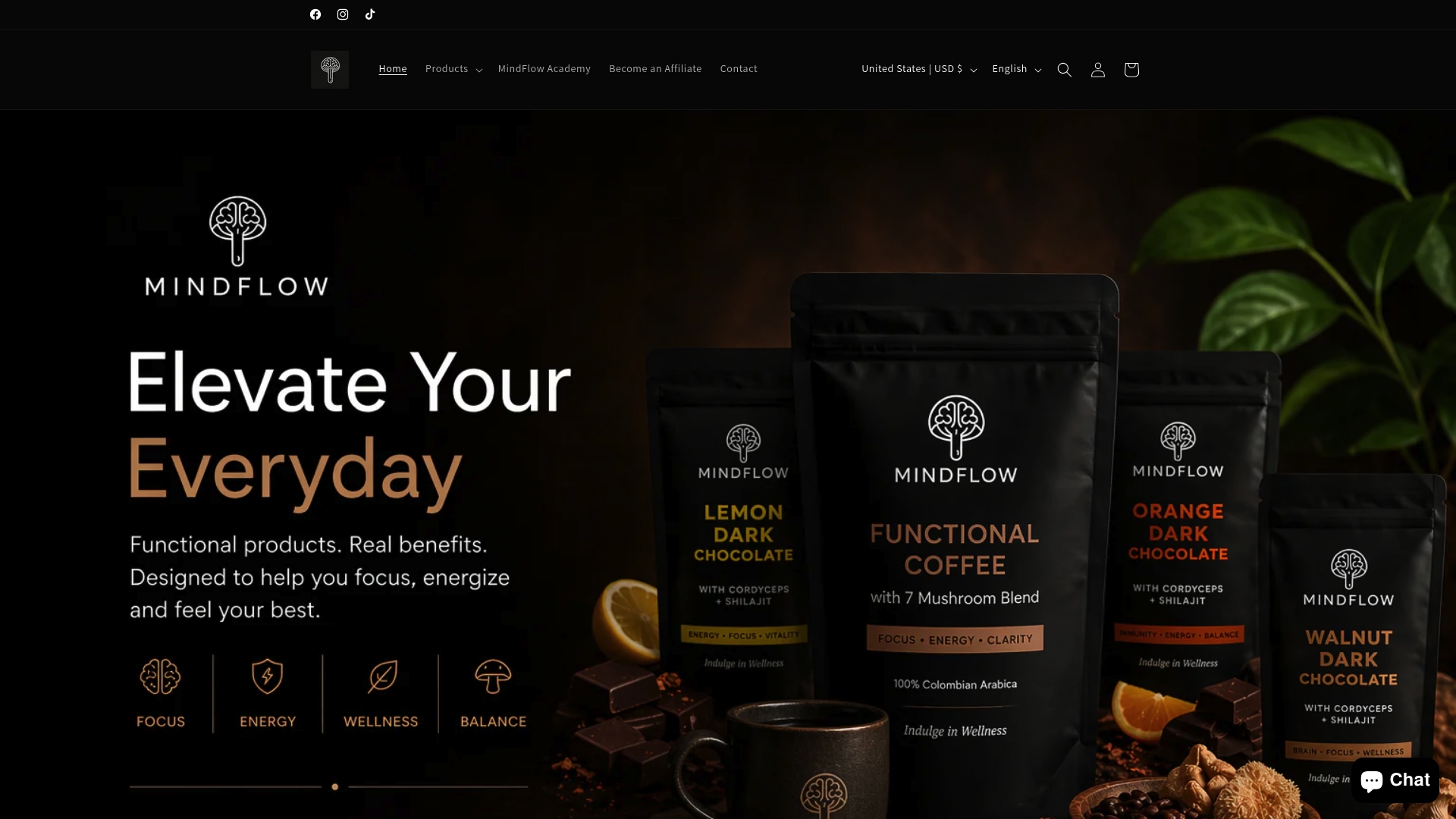
The medicinal mushroom powders collection covers the core species with full sourcing and extraction information. For those who want a broader adaptogenic profile in a single daily format, the 7 mushroom blend capsules offer a convenient, well-documented option. And for those specifically targeting cognitive resilience and focus, lion’s mane powder is available as a standardised extract with full transparency on bioactive content. Indulge in Wellness, on your terms.
Frequently asked questions
Are mushroom supplements safe for daily use?
Most are safe for healthy adults when product quality is verified, but you should look for third-party testing and COAs and discuss ongoing use with your healthcare provider, particularly if you have existing health conditions or take medication.
Can mushroom supplements really improve focus or memory?
Some studies show minor gains in specific domains like visual attention, but results vary by product and user; effects depend heavily on standardisation, dose, and duration of use rather than any single ingredient.
What is a COA and why does it matter for supplements?
A COA (Certificate of Analysis) is a batch-specific laboratory document that verifies species identification and confirms the product is free from contaminants; it is the most reliable quality and safety check available to consumers.
Are mushroom supplements FDA-approved?
No. There is no pre-market FDA approval for dietary supplements; manufacturers are responsible for safety and label accuracy, and regulatory action only occurs after a product is already on the market.
Do adaptogenic mushrooms help with stress?
Some users report stress reduction and mood improvement, but evidence is mixed across trials; effects differ between individuals and products, and expectations should be calibrated to the specific formulation and duration of use.