

Top functional mushrooms for focus and mental clarity
Cognitive fatigue is not a personality flaw. It is a predictable result of long hours, fragmented attention, and the relentless demand for output that defines modern professional life. Caffeine helps, until it does not. The jitters, the mid-afternoon slump, the broken sleep cycle: these are familiar trade-offs. That is why functional mushrooms have attracted serious attention as natural alternatives. But the market is noisy, the claims are bold, and the science is more nuanced than most product labels suggest. This article cuts through that noise.
Table of Contents
- How to evaluate functional mushrooms for productivity
- Lion’s mane: focus, memory, and mood support?
- Cordyceps: sustained energy for mental stamina
- Side-by-side: lion’s mane vs cordyceps for productivity support
- Choosing the right functional mushroom (or blend) for your needs
- The uncomfortable truth about functional mushrooms and productivity
- Explore quality functional mushrooms for your daily routine
- Frequently asked questions
Key Takeaways
| Point | Details |
|---|---|
| Task-specific evidence | Lion’s mane and cordyceps may boost productivity in domain-specific ways rather than as all-purpose enhancers. |
| Cumulative, not instant | Functional mushrooms deliver subtle, gradual support—most effects require consistent use for several weeks. |
| Quality matters | Choosing high-quality extracts, especially for cordyceps, is crucial as potency and effects can vary between brands. |
| Blends can offer synergy | Blending lion’s mane and cordyceps may address both mental focus and sustained energy where appropriate. |
| Holistic approach recommended | Functional mushrooms work best alongside good sleep, nutrition, and stress management, not as a standalone fix. |
How to evaluate functional mushrooms for productivity
Before exploring specific mushrooms, it is vital to know how to assess their claimed benefits and the relevant science behind them.
Productivity is not a single metric. It spans focus, working memory, mental stamina, mood stability, and energy levels. Each of these can be influenced by different biological mechanisms, which means no single mushroom does everything. The first thing to understand is that the human evidence base for a direct, caffeine-like focus effect from functional mushrooms remains limited and inconsistent. Mechanism-by-mechanism framing tends to map lion’s mane to cognitive and neurotrophic pathways, and cordyceps to energy and mitochondrial support, but that mapping is cleaner in theory than in practice.
When reviewing any functional mushroom, consider these criteria:
- Type of study: Acute trials measure effects within hours; chronic trials run eight weeks or longer. Results can differ significantly between the two.
- Population studied: Effects observed in older adults or people with cognitive complaints may not translate to healthy 25-year-olds.
- Domain specificity: A supplement may improve visual attention without affecting verbal recall. That matters when matching a product to your actual needs.
- Bioactive content verification: Third-party testing for beta-glucans and other active compounds is the only reliable quality signal. Marketing claims alone are not sufficient.
- Batch variability: Especially relevant for cordyceps, where cultivation origin affects compound concentration meaningfully.
Good nutrition for brain health is always the baseline. Functional mushrooms work best when your fundamentals are already in place.
Treat any functional mushroom as a tool with a specific job, not a general-purpose upgrade for your entire output.
When choosing a supplement, prioritise transparent sourcing, verifiable beta-glucan content, and a format that fits your daily routine. Whether that is a lion’s mane powder you add to a morning drink or a capsule you take with breakfast, consistency matters more than the format itself.
Lion’s mane: focus, memory, and mood support?
With clear criteria in mind, let’s examine lion’s mane, the best-known “brain” mushroom and arguably the most studied functional mushroom for cognitive applications.
Lion’s mane (Hericium erinaceus) is often positioned as a nootropic, a compound that supports cognitive function. The appeal is real, but the evidence is more carefully bounded than most product descriptions imply. An acute randomised double-blind crossover study in healthy adults aged 18 to 35 found no overall improvement in global cognitive function or mood after a single dose, though some individual task performance did improve. That is an important distinction worth sitting with.

The more promising picture comes from longer-term use. A trial in adults aged 40 to 75 with self-reported cognitive difficulty found modest improvements in visual attention and working memory, alongside better subjective sleep quality and mood after eight or more weeks. This suggests lion’s mane is better suited to people dealing with genuine cognitive complaints rather than healthy individuals seeking a quick performance edge.
An expert review on PubMed reinforces the nuance: effects, when present, are task and domain specific. You should not expect a broad, sweeping productivity boost. You might notice that a particular type of focused work becomes slightly less effortful over weeks of consistent use.
Key takeaways for lion’s mane:
- Not a quick fix: Effects are unlikely to be felt the same day you start.
- Most relevant for: Adults experiencing brain fog, disrupted sleep, mild low mood, or early cognitive complaint.
- What improves: Working memory, visual attention, subjective morning restedness.
- What does not change much: Overall reaction time, general mood in healthy young adults, immediate focus on demand.
- Safety profile: Well-tolerated in trials, with no serious adverse events reported.
- Format considerations: Powder forms allow flexible dosing; organic lion’s mane capsules offer convenience for structured supplementation.
Pro Tip: If you are 40-plus and regularly wake up feeling unrefreshed, lion’s mane may be particularly relevant to your situation. The sleep and mood data from the medRxiv trial suggests those benefits may be as practically useful as any cognitive effect.
Lion’s mane is not a shortcut. It is a slow, incremental support for the kind of cognitive resilience that builds over weeks, not hours.
Cordyceps: sustained energy for mental stamina
While lion’s mane is acclaimed for brain support, cordyceps is prized for its role in energy metabolism. How does that matter for productivity?
Cordyceps works along a different pathway entirely. Rather than targeting neurotrophic factors directly, it supports oxygen utilisation and mitochondrial efficiency, which means its primary benefits are physical but with clear knock-on effects for mental stamina. A 2025 systematic review and meta-analysis found that Cordyceps sinensis improved endurance performance, ventilatory threshold, and VO2peak in adult athletes. That is an energy story, not a focus story.
The connection to mental performance is indirect but logical. When physical fatigue is reduced and oxygen delivery improves, cognitive performance under sustained effort tends to hold up better. You are not sharper in the way caffeine briefly makes you feel sharp. You simply run out of steam less quickly during a long meeting or a demanding afternoon of deep work.
Clinical evidence also extends beyond athletic performance. A randomised waitlist-controlled trial in long COVID patients reported meaningful reductions in fatigue and insomnia after cordyceps intervention. For professionals dealing with post-illness burnout or chronic low energy, this is relevant data.
Key points for cordyceps:
- Primary benefit: Energy metabolism and endurance, not direct cognitive focus.
- Most relevant for: Professionals with sustained physical or mental output demands, those managing fatigue or disrupted sleep.
- Onset: Effects on endurance and energy-related markers have been observed over several weeks of consistent use.
- Quality control: Cordyceps quality matters significantly. Verify cultivation origin and cordycepin content when choosing a product. Wild-harvested and mycelium-on-grain products vary widely in potency.
- Format options: Cordyceps powder can be added to pre-workout drinks or morning coffee alternatives.
Resetting your circadian rhythm through sleep hygiene is strongly complementary to cordyceps use. The fatigue-reduction evidence makes most sense when sleep and recovery are also being addressed.
Pro Tip: If your productivity problem is less about focus and more about fading energy across a long day, cordyceps is likely the more relevant starting point. Explore the full range of medicinal mushroom powders to find a format that suits your routine.
Cordyceps does not make you sharper. It helps you stay functional longer when output demands are sustained.
Side-by-side: lion’s mane vs cordyceps for productivity support
Now that lion’s mane and cordyceps are each outlined, here is a direct comparison to help you decide.
| Feature | Lion’s mane | Cordyceps |
|---|---|---|
| Primary mechanism | Neurotrophic support, NGF stimulation | Oxygen utilisation, mitochondrial energy |
| Main evidence base | Cognitive domains, mood, sleep quality | Physical endurance, fatigue reduction |
| Onset | Gradual (8+ weeks for cognitive effects) | Gradual (weeks for energy and endurance) |
| Best suited for | Brain fog, mood dips, cognitive complaint | Sustained output, physical/mental fatigue |
| Acute (same-day) effect | Minimal to none overall | Minimal to none overall |
| Safety in trials | Well-tolerated | Well-tolerated |
| Quality marker | Beta-glucan content, fruiting body vs mycelium | Cordycepin content, cultivation origin |
As productivity gains may appear only under specific conditions rather than universally, the choice between these two comes down to identifying your actual bottleneck, not picking the one with the more appealing branding.
Who is best suited to each option:
- Lion’s mane suits you if: You experience foggy thinking in the mornings, struggle with working memory under pressure, or have noticed mood and sleep quality declining alongside your focus.
- Cordyceps suits you if: You feel fine cognitively but physically depleted, your energy flags after lunch, or you have a high output role that demands sustained concentration over long periods.
- Both together may suit you if: Your productivity issues span cognitive clarity and energy simultaneously, which is common in senior roles, creative professionals with variable schedules, and those recovering from burnout.
A 7 mushroom blend can be a practical way to cover multiple mechanisms without managing separate products. Alternatively, a brain-boosting chocolate format integrates functional mushrooms into an existing daily ritual with minimal friction.
Choosing the right functional mushroom (or blend) for your needs
With all the facts and comparisons at hand, how can you choose what is best for your workflow?
Note that productivity gains tend to be situation-specific. People with baseline cognitive complaints see more measurable benefit than those who are already performing well. That is not a reason to avoid functional mushrooms, but it is a reason to set realistic expectations before you buy.
Here is a practical checklist:
- Identify your specific bottleneck. Is it focus, energy, mood, sleep quality, or some combination? This determines which mushroom mechanism is most relevant to you.
- Check bioactive content. Look for verified beta-glucan percentages on lion’s mane products and confirmed cordycepin content on cordyceps products. If a brand cannot provide this information, keep looking.
- Choose a consistent format. A mushroom coffee alternative you drink every morning is more effective than a powder you use irregularly. Habit consistency drives outcomes.
- Commit to at least eight weeks. Functional mushrooms are not designed for acute stimulation. Expect gradual shifts rather than immediate sensations.
- Start with one. If you are new to functional mushrooms, start with either lion’s mane or cordyceps and assess over six to eight weeks before adding anything else.
- Combine thoughtfully. If you choose a blend, verify that each ingredient is present at a meaningful dose. Some multi-mushroom products spread the dose too thinly across many ingredients to produce any real effect.
Scenario examples by professional type:
- High-pressure corporate role: You have back-to-back meetings, a full inbox, and a six-hour output window. Cordyceps for energy regulation, combined with lion’s mane for working memory, represents a reasonable dual approach.
- Creative professional: You rely on lateral thinking and mood for output. Lion’s mane, particularly given the mood and sleep evidence, is the more targeted starting point.
- Long working sessions: If your challenge is sustaining focus across a 10-hour day rather than sharpening it for short sprints, cordyceps is likely more practically useful.
Dietary and safety considerations are straightforward. Both mushrooms are well-tolerated in current trials, with no major adverse events recorded. Those with mushroom allergies should exercise caution, and anyone on immunosuppressants should speak to a clinician before starting.
Pro Tip: Keep a simple log for the first eight weeks. Note your energy, focus, and mood each morning. Patterns in that data tell you far more than how you feel after a single day of use.
The uncomfortable truth about functional mushrooms and productivity
Here is something the functional wellness industry rarely says plainly: supplements amplify habits. They do not replace them.
Most of the evidence for lion’s mane and cordyceps shows modest effects in specific populations under specific conditions. That is genuinely useful if you are in those populations and those conditions apply to you. But if you are sleeping five hours a night, skipping meals, and sitting in a chair without breaks, a mushroom supplement will not close that gap.
The marketing language around functional mushrooms often creates the impression of a clean cognitive upgrade: take this, think better, feel sharper. The actual evidence is more qualified. Effects tend to emerge slowly, affect specific cognitive domains, and are most visible in people who already have something working against them, whether that is age, fatigue, stress, or disrupted sleep.
This is not a reason to dismiss functional mushrooms. It is a reason to place them correctly in your toolkit. They belong alongside consistent sleep, adequate protein, regular movement, and structured recovery time. Not instead of any of those things.
Understanding how to make mushroom coffee into a daily ritual is a small but real example of this principle in action. It is not the ritual that produces the outcome. It is the consistency and the habit structure around it that creates conditions where the functional ingredients can actually do their work.
The professionals who see the most benefit from functional mushrooms are typically the ones who treat them as one part of a deliberately managed routine, not as a workaround for poor fundamentals.
Explore quality functional mushrooms for your daily routine
If you have worked through this article and recognised yourself in one of the use cases, the practical next step is straightforward.
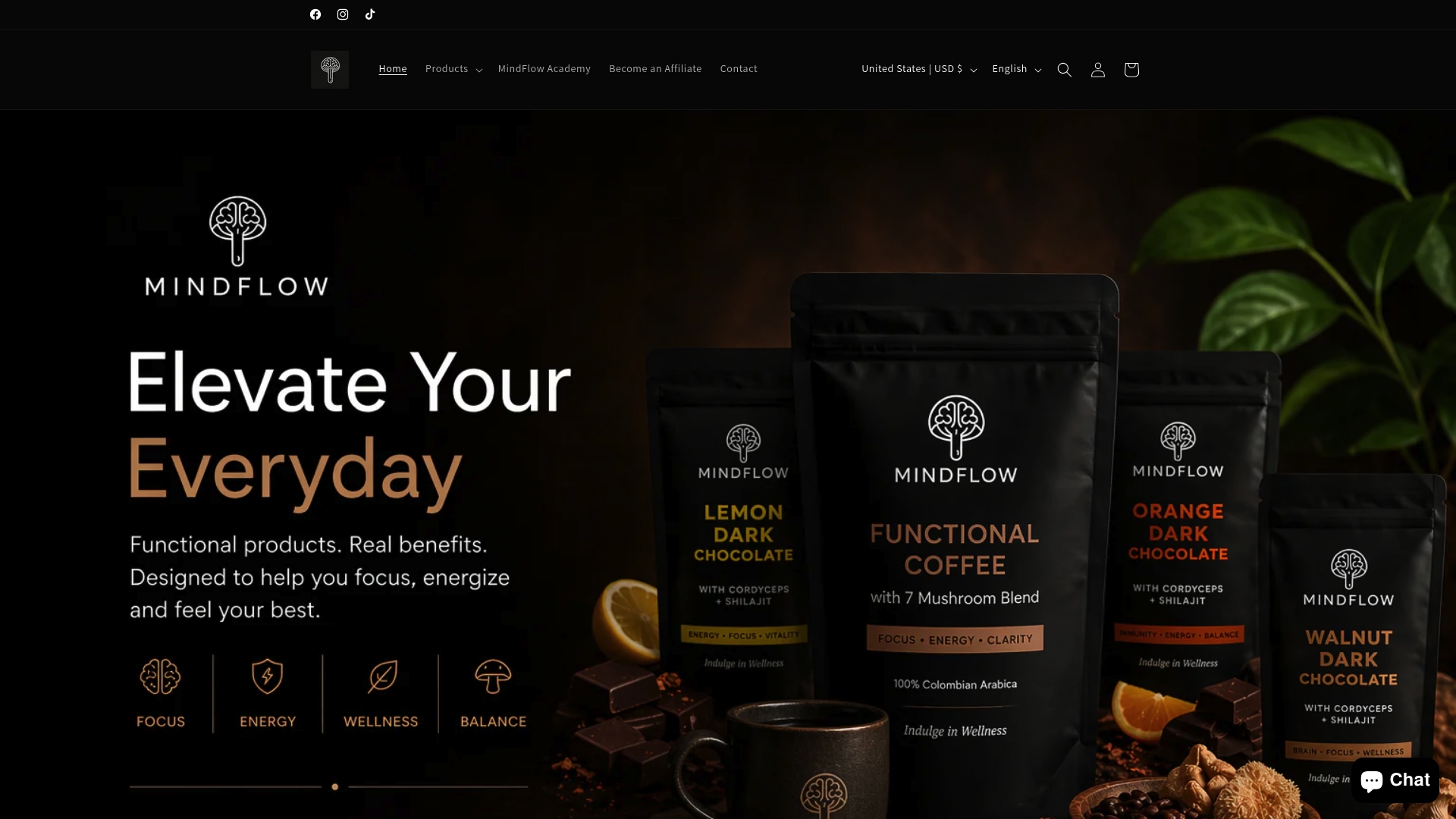
MindFlow offers a range of formats designed to make functional mushroom use frictionless. Whether you want to start with functional mushroom chocolates as a low-commitment daily ritual, move to a brain-boosting daily supplement for structured cognitive support, or explore the full range of medicinal mushroom powders for flexible, blend-your-own use, sourcing and transparency are built into every product. Each format is designed for professionals who want effective ingredients in formats that actually fit their lives.
Frequently asked questions
Can I combine lion’s mane and cordyceps for better productivity?
Yes, many users combine both to address different aspects of productivity. Lion’s mane may support cognitive domains such as working memory and mood, whilst cordyceps targets energy and stamina, though scientific evidence for their combined synergy specifically remains understudied.
How quickly do functional mushrooms work for focus and energy?
Acute effects are generally subtle, with more noticeable impacts seen after several weeks of consistent use. The medRxiv cognition trial found meaningful effects primarily in adults with baseline cognitive complaints rather than in healthy individuals after a single dose.
Are functional mushrooms safe for daily use?
Current trials report no major adverse events when taken as directed. Both lion’s mane and cordyceps showed good tolerability in clinical trial settings, though batch quality and individual tolerance should always be considered before starting daily use.
Can functional mushrooms replace my morning coffee?
Mushrooms offer a different, more gradual effect rather than caffeine’s rapid stimulation. There is no evidence for a direct, caffeine-like acute focus effect from functional mushrooms, but they may support underlying energy and cognitive resilience over time as part of a consistent routine.