

How cordyceps supports natural energy without caffeine
Caffeine is so deeply embedded in modern routines that questioning it feels almost radical. Yet a growing number of health-conscious individuals are stepping back and asking whether there is a better way to support sustained energy and focus, without the jitters, the afternoon crash, or the dependency that tends to follow. Cordyceps, a fungus with centuries of use in traditional wellness practices, is drawing serious scientific attention as a genuinely different kind of energy support. This guide breaks down exactly how it works, what the evidence actually shows, and how it compares to the stimulant most of us rely on by default.
Table of Contents
- What is cordyceps and why is it considered for energy?
- How does the cordyceps energy mechanism work?
- What does the evidence say about energy, endurance, and focus?
- Cordyceps vs caffeine: what’s the real difference?
- Who benefits most and how should cordyceps be used?
- Why most people misunderstand natural energy alternatives
- Explore natural energy support with MindFlow
- Frequently asked questions
Key Takeaways
| Point | Details |
|---|---|
| Cellular energy support | Cordyceps helps your body produce energy at a metabolic level, rather than stimulating the nervous system. |
| Effects are gradual | Unlike caffeine, cordyceps works over weeks for steady endurance and energy without jitters. |
| Best for endurance | Athletes and active individuals may see the most benefits in stamina and recovery. |
| Cognitive effects less certain | Early animal data hints at focus support, but direct human benefits for focus are still emerging. |
| Choose quality extracts | Selecting reputable cordyceps products ensures maximum efficacy and safety. |
What is cordyceps and why is it considered for energy?
Cordyceps is a genus of parasitic fungi with a long history in East Asian wellness traditions, where it was prized for its ability to support vitality, stamina, and physical resilience. For centuries, practitioners used it to help people recover from fatigue and maintain physical output. Today, modern interest has shifted from folklore to functional science, with researchers investigating how cordyceps might support both physical performance and mental clarity without relying on stimulant pathways.
What makes cordyceps particularly interesting is that its energy-related effects are attributed to cordycepin and other adenosine derivatives that may influence cellular energy pathways directly. This is fundamentally different from caffeine, which works by blocking adenosine receptors in the brain to create a perception of alertness. Cordyceps does not mask fatigue signals. Instead, it may work at the level of cellular metabolism, potentially supporting the body’s own energy production systems.
Key reasons cordyceps is considered for energy support:
- It contains bioactive compounds including cordycepin, polysaccharides, and adenosine derivatives
- Traditional use focused on stamina, endurance, and recovery from physical exertion
- Modern extracts are standardised to concentrate the most active compounds
- It does not act on the central nervous system in the way stimulants do
- Effects are associated with metabolic and antioxidant pathways rather than neurological stimulation
“The distinction matters: cordyceps does not give you energy by borrowing from tomorrow. It may support the systems your body uses to produce energy today.”
If you are looking to explore this for yourself, MindFlow Cordyceps Powder is formulated with a high-quality extract designed for daily functional use.
How does the cordyceps energy mechanism work?
Understanding the mechanism helps set realistic expectations. Cordyceps does not produce a noticeable buzz within minutes of consumption. The process is more gradual, operating through several interconnected biological pathways that support energy at the cellular level.
The primary compound of interest is cordycepin (3-deoxyadenosine), which structurally resembles adenosine. Because of this similarity, it may interact with adenosine-related pathways involved in ATP (adenosine triphosphate) production. ATP is the molecule your cells use to power virtually every biological function, from muscle contraction to cognitive processing. Supporting ATP availability is therefore a meaningful target for energy optimisation.

In animal models, cordycepin improved endurance and positively affected fatigue-related biomarkers and neurocognitive outcomes. These findings point toward real biological activity. However, it is important to note that the ATP mechanism is not yet fully demonstrated in human clinical studies. The science is promising but still maturing.
The broader mechanistic picture involves several pathways:
- AMPK activation: AMP-activated protein kinase is a cellular energy sensor. Cordyceps compounds may activate AMPK, which helps regulate energy balance and metabolic efficiency.
- Nrf2 pathway: This pathway governs the body’s antioxidant response. Reduced oxidative stress means cells can produce and use energy more efficiently.
- BDNF modulation: Brain-derived neurotrophic factor supports neuronal health and may play a role in cognitive resilience and focus.
- Mitochondrial support: Some evidence suggests cordyceps may support mitochondrial function, which is directly linked to how efficiently cells generate ATP.
| Mechanism | Potential effect | Evidence level |
|---|---|---|
| Cordycepin and adenosine pathways | ATP production support | Preclinical, emerging human data |
| AMPK activation | Metabolic efficiency | Animal models |
| Nrf2 pathway | Antioxidant protection | Preclinical |
| Mitochondrial support | Cellular energy output | Early stage |
| BDNF modulation | Neuroprotection, focus | Animal models |
Pro Tip: When choosing a cordyceps product, look for extracts standardised to cordycepin content. This is the most researched active compound and the one most closely linked to the cordyceps mechanistic explanation described above.
What does the evidence say about energy, endurance, and focus?
Moving from mechanism to real-world outcomes, the evidence picture is more nuanced than supplement marketing often suggests. Human studies on cordyceps show a range of results, and understanding the variation helps you make an informed decision.
On the physical side, results are more consistent. A meta-analysis found that Cordyceps sinensis supplementation improved endurance-related outcomes with relatively low heterogeneity across studies, meaning the findings were reasonably consistent rather than scattered. Specific improvements were noted in VO2peak (the maximum rate of oxygen consumption during exercise), time to exhaustion, and recovery markers. These are meaningful outcomes for anyone using cordyceps to support athletic performance or sustained physical output.
However, aerobic performance effects remain inconsistent across all trials, and mechanisms are still under active investigation. Some studies in healthy volunteers and athletes report null or mixed results, particularly in those who are already highly trained. Training status appears to matter considerably. Sedentary or moderately active individuals may see more pronounced effects than elite athletes whose systems are already highly optimised.
Key factors that influence outcomes:
- Training status: Moderately active individuals tend to respond more than elite athletes
- Extract type: Cordyceps militaris and Cordyceps sinensis have different bioactive profiles
- Dose and duration: Most positive studies use consistent supplementation over two to sixteen weeks
- Standardisation: Products with defined cordycepin content show more reliable results
- Individual variation: Genetic and metabolic differences affect how people respond
On the cognitive side, the picture is less clear. Animal studies suggest neuroprotective effects and potential benefits for focus and memory via BDNF and antioxidant pathways. But robust human clinical trials specifically measuring cognitive outcomes are limited. The honest position is that cordyceps may support mental clarity indirectly, through reduced fatigue and better energy availability, rather than acting as a direct nootropic.
For those interested in exploring cordyceps in a more accessible format, MindFlow Chocolate combines functional mushroom extracts with a format that fits naturally into daily life.
Cordyceps vs caffeine: what’s the real difference?
This comparison is where expectations often diverge from reality. Caffeine and cordyceps operate through entirely different mechanisms, produce different experiences, and suit different goals.
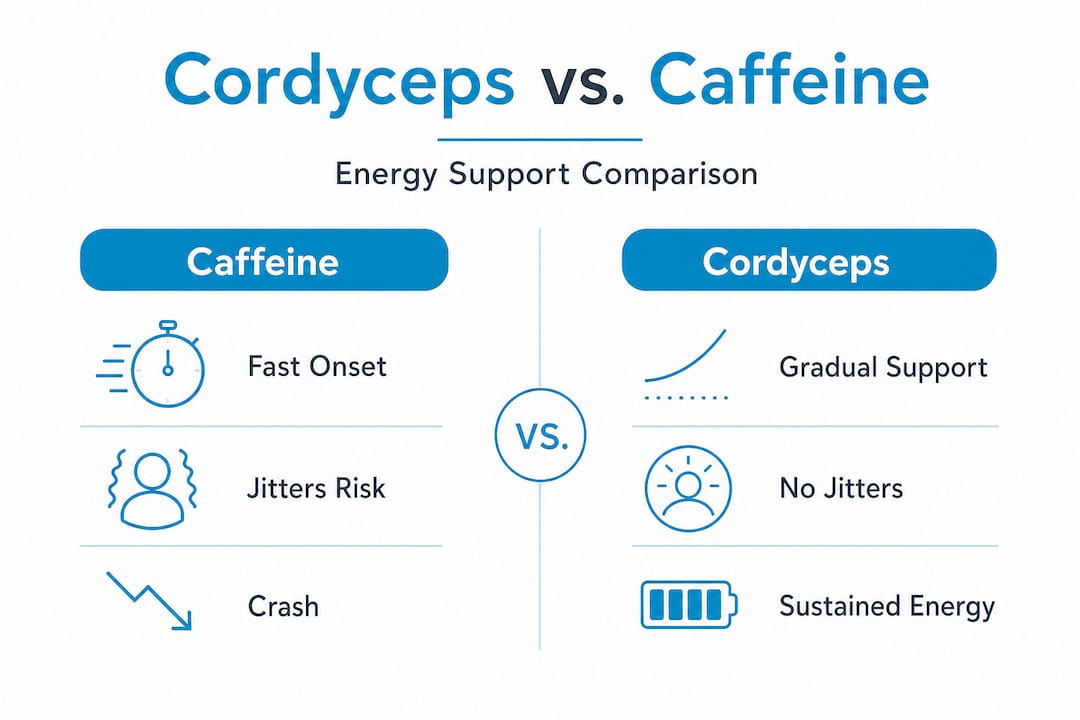
Caffeine is fast. It blocks adenosine receptors in the brain within thirty to sixty minutes, producing a sharp, noticeable increase in alertness. For short-term tasks requiring immediate focus, it is highly effective. The tradeoffs are well documented: jitteriness, elevated heart rate, disrupted sleep if consumed too late, and a rebound fatigue when the effect wears off. Regular use also leads to tolerance, meaning you need more to achieve the same effect.
Cordyceps is slow. Effects build over weeks rather than arriving within an hour. There is no noticeable buzz, no sudden alertness, and no crash. For people who are sensitive to stimulants or who experience anxiety with caffeine, this is a significant advantage. The energy support feels different because it is different: it comes from the body functioning more efficiently rather than from a neurological override.
| Feature | Caffeine | Cordyceps |
|---|---|---|
| Onset | 30 to 60 minutes | Days to weeks |
| Mechanism | Adenosine receptor blockade | Cellular energy pathway support |
| Duration of effect | 4 to 6 hours | Cumulative with consistent use |
| Side effects | Jitters, crash, sleep disruption | Generally well tolerated |
| Dependency risk | High with regular use | Low |
| Best suited for | Immediate alertness | Sustained energy and endurance |
Pro Tip: If you currently rely on caffeine and want to reduce dependency, cordyceps is not a direct swap. Use it consistently for several weeks before reducing caffeine, allowing the cellular support mechanisms to establish before you remove the stimulant.
Benefits of choosing cordyceps over caffeine for daily energy:
- No disruption to sleep architecture
- No tolerance build-up requiring escalating doses
- Suitable for use at any time of day
- Compatible with stress management and recovery goals
- Supports rather than overrides natural energy regulation
Who benefits most and how should cordyceps be used?
Cordyceps is not a universal solution, and its benefits are not equally distributed across all user types. Understanding where it is best supported by evidence helps you decide whether it fits your situation.
Active individuals and athletes are the group with the most consistent evidence behind them. Endurance and aerobic outcomes are better supported than cognitive or strength-related effects, and these benefits appear most clearly in moderately trained individuals rather than elite competitors. If you train regularly and want to support sustained output without stimulants, cordyceps is a well-reasoned choice.
Busy professionals seeking focus without stimulant side effects may find cordyceps useful, particularly if caffeine sensitivity is an issue. The caveat is that direct cognitive benefits in humans are not robustly established in clinical trials. What cordyceps may offer is a reduction in fatigue-driven cognitive decline rather than a direct enhancement of focus or memory.
Older adults interested in healthy ageing may appreciate the antioxidant and cellular support properties. Oxidative stress increases with age and contributes to both physical and cognitive decline. Cordyceps’ potential to support antioxidant pathways makes it a reasonable addition to a broader wellness routine.
How to use cordyceps effectively:
- Start with a consistent daily dose, typically 1,000 to 3,000 mg of standardised extract
- Use it at the same time each day to support consistent blood levels
- Allow at least four weeks before assessing effects
- Combine with adequate sleep, hydration, and a balanced diet for best results
- Consider pairing with other adaptogens for broader support
If you prefer a simple daily format, MindFlow Cordyceps Powder is designed for easy integration into morning routines, smoothies, or functional drinks.
Why most people misunderstand natural energy alternatives
There is a deeply ingrained expectation that energy support should feel like something. A buzz, a lift, a noticeable shift in alertness. Caffeine has trained an entire generation to equate “energy” with a rapid, perceptible change in mental state. When cordyceps does not deliver that, people assume it is not working.
This is the core misunderstanding. Cordyceps does not produce a sensation. It supports a process. The difference between these two things is significant. One is a signal your brain receives. The other is a change in how efficiently your cells produce and use energy. You may not feel the latter in the same obvious way, but over weeks of consistent use, many people notice they are less fatigued, recover faster, and sustain effort for longer without the sharp highs and lows of stimulant dependency.
Energy supplement alternatives like cordyceps represent a different philosophy of support. Rather than borrowing alertness from your future self, they invest in the biological infrastructure that generates real energy. The science supports subtle, sustained benefits over time. That is the opposite of a caffeine jolt, and for many people, it is exactly what they need.
The honest framing is this: cordyceps is not a replacement for caffeine if what you want is an immediate, noticeable effect. It is a meaningful addition to a broader approach to energy management, one that supports resilience rather than masking depletion.
Explore natural energy support with MindFlow
You now have a clear, evidence-based picture of what cordyceps offers and how it differs from conventional stimulants. The next step is straightforward.
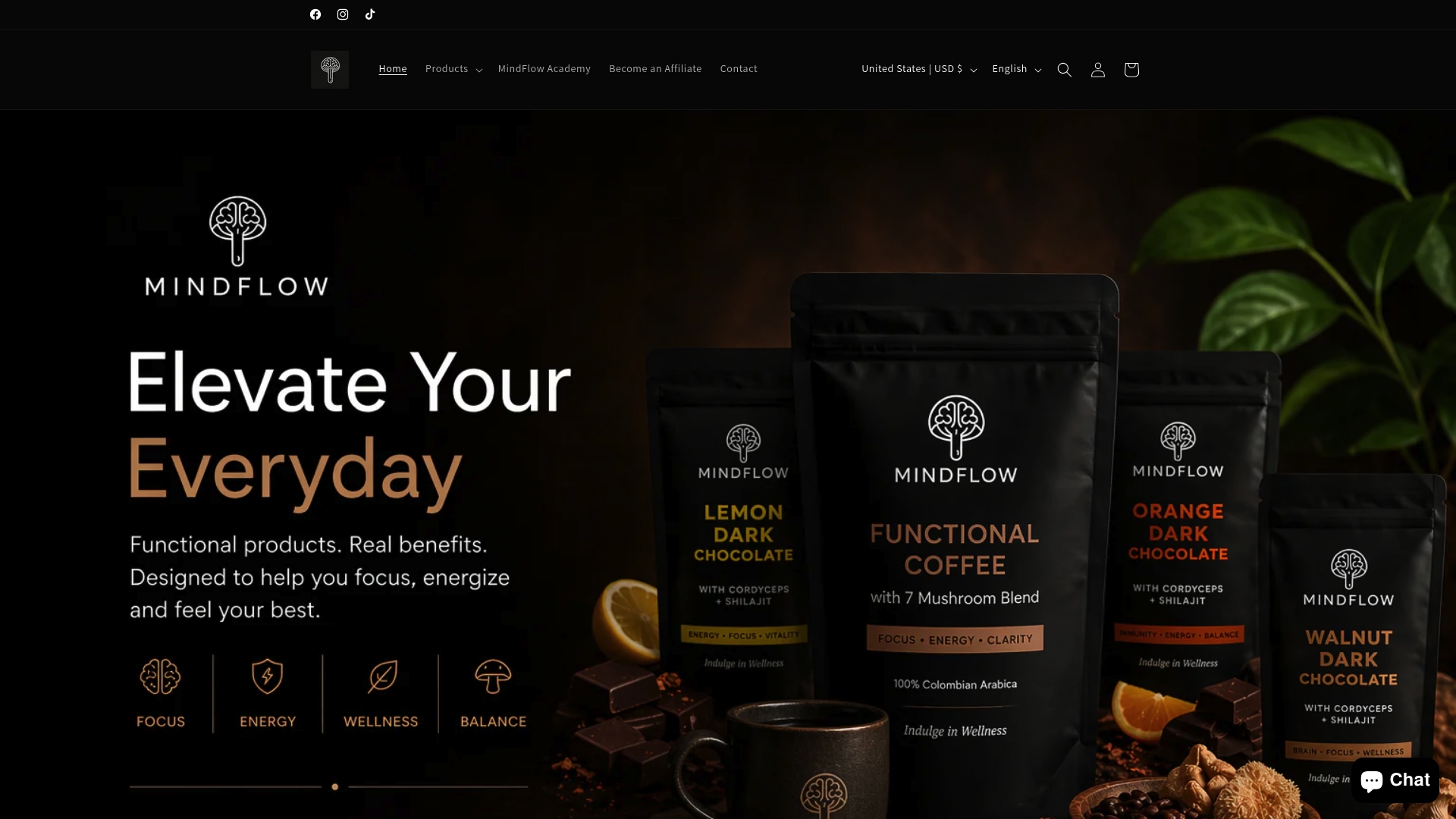
MindFlow formulates functional mushroom products specifically for people who want clean, sustained energy support without stimulants. The MindFlow Cordyceps Powder is a high-quality extract for daily use, while the 7 Mushroom Blend combines cordyceps with six other functional mushrooms for broader adaptogenic support. For those who prefer a morning ritual, MindFlow Mushroom Coffee delivers a familiar format with functional benefits built in. Each product is formulated with purpose, minimal in design, and built around the principle that real wellness is steady, not sudden.
Frequently asked questions
How long does it take to feel the effects of cordyceps?
Cordyceps effects build gradually over several weeks rather than offering an instant boost like caffeine. Most users report noticing changes after four to eight weeks of consistent daily use.
Can cordyceps replace caffeine for mental focus?
Cordyceps offers energy support without stimulant side effects, but direct cognitive benefits in humans are not yet well established in clinical trials. It may reduce fatigue-driven mental decline rather than directly sharpening focus.
Is cordyceps safe for everyday use?
Cordyceps is generally considered safe for daily use, with dose-dependent improvements observed in studies lasting two to sixteen weeks. Individual responses vary, so starting with a standard dose and monitoring your response is sensible.
What type of cordyceps is best for energy?
Cordyceps militaris and sinensis extracts are most referenced in energy and endurance research. Cordyceps militaris tends to have higher cordycepin content, making it the more commonly used extract in modern functional products.
Does cordyceps cause jitters or crashes like caffeine?
No. Cordyceps does not cause the acute side effects associated with caffeine, including jitteriness, elevated heart rate, or post-stimulant fatigue. It is not a stimulant and does not act on the central nervous system in the same way.