

How to host a mushroom coffee tasting event
Mushroom coffee has moved well beyond niche wellness circles. It now sits on kitchen counters alongside lion’s mane supplements and adaptogen tinctures, and people are genuinely curious about what it tastes like, how it compares to regular coffee, and whether the functional benefits are real. Yet most people have never had the chance to try multiple blends side by side in a structured way. Hosting a mushroom coffee tasting changes that. It turns curiosity into direct experience, and it gives your group a shared framework for evaluating something genuinely worth understanding.
Table of Contents
- What you’ll need to host a mushroom coffee tasting
- Setting up the tasting: Step-by-step instructions
- Evaluating mushroom coffee: Flavour, texture and energy effects
- Tips for a memorable and inclusive gathering
- What most mushroom coffee tastings miss: Community, not just cupping
- Explore functional mushroom coffee and wellness products
- Frequently asked questions
Key Takeaways
| Point | Details |
|---|---|
| Plan with purpose | A thoughtful gathering setup ensures fair comparisons and an enjoyable experience for all. |
| Benchmark taste and energy | Separate taste and energy effects offer a clearer sense of each blend’s strengths. |
| Include everyone | Provide a variety of caffeine options and emphasise the social, not just caffeinated, elements. |
| Leverage community spirit | Hosting tastings supports wellness discovery and brings people together. |
What you’ll need to host a mushroom coffee tasting
With growing curiosity about mushroom coffee, let’s begin by gathering the tools and ingredients required for an immersive and educational tasting.
The ideal group size for a mushroom coffee tasting is between four and ten people. Fewer than four makes comparison discussion thin. More than ten becomes logistically difficult to manage consistently. Aim for six to eight as your sweet spot. That size allows for varied opinions, lively discussion, and manageable preparation.
Essential materials checklist:
- Small tasting cups or espresso cups (one per sample per person)
- A kettle with temperature control or a standard kettle
- A timer
- Notepads and pens, or printed tasting cards
- Teaspoons for stirring
- A neutral palate cleanser such as water crackers or plain water
- At least three different mushroom coffee blends
- One standard filter coffee or instant coffee as a control
- A measuring spoon for consistent dosing
- Labels or numbered cards for blind tasting
Sourcing a variety of medicinal mushroom coffee powders gives your group a genuine range to evaluate. Look for blends featuring lion’s mane, chaga, reishi, and cordyceps as these are the most commonly used functional mushrooms and each contributes a distinct profile to the final cup.
According to structured review methodology, taste benchmarking should track flavour, aftertaste, texture or grit, and energy effects independently. This is important because a blend that tastes excellent may still leave a gritty residue or produce a different energy response than expected. Keeping these categories separate prevents one strong impression from colouring the entire evaluation.
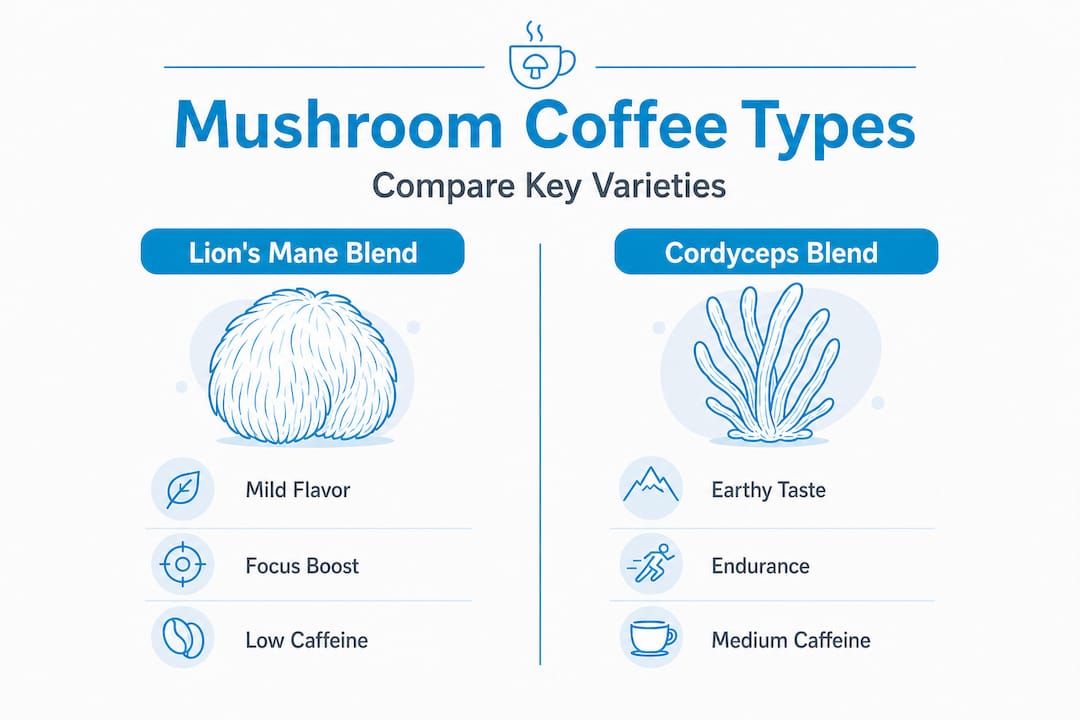
Comparison overview of common mushroom coffee types:
| Mushroom type | Flavour profile | Functional focus | Caffeine level |
|---|---|---|---|
| Lion’s mane blend | Mild, slightly nutty | Cognitive clarity | Low to moderate |
| Chaga blend | Earthy, slightly bitter | Immune support | Low |
| Reishi blend | Woody, slightly bitter | Stress resilience | Very low |
| Cordyceps blend | Neutral, mild | Energy and stamina | Low to moderate |
| Multi-mushroom blend | Complex, earthy | Broad spectrum | Varies |
| Regular coffee (control) | Bold, roasted | Standard stimulant | High |
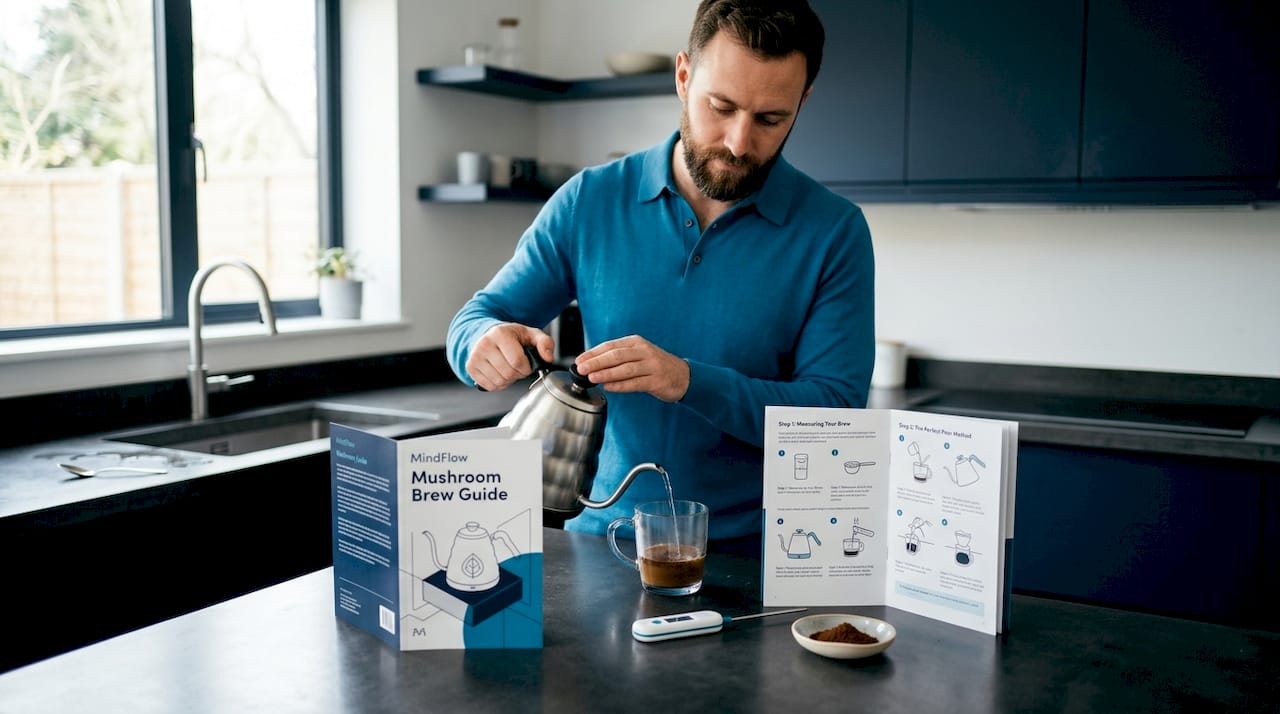
Reviewing guidance on perfect mushroom coffee preparation before your event will help you understand water temperature, steeping time, and dosage for each blend. Getting these details right matters more than most people expect.
Setting up the tasting: Step-by-step instructions
Armed with the right supplies, it’s time to set up an environment that brings out the nuances of each blend while ensuring fairness and consistency.
Consistency is everything in a comparative tasting. If one sample is brewed hotter, stirred longer, or dosed more generously, the results become unreliable. Here is a clear step-by-step process to follow:
- Prepare your tasting area. Set out cups in rows, one row per participant. Label each column with a number or letter corresponding to each blend. Keep the identity of each blend hidden until after scoring if you want a blind tasting.
- Measure consistently. Use the same amount of powder for every sample, typically one teaspoon per 200ml of water unless a specific brand recommends otherwise.
- Brew all samples at the same temperature. Around 90 to 95 degrees Celsius is standard for most mushroom coffee powders. Use a thermometer if possible.
- Stir each sample for the same duration. Ten seconds of consistent stirring is sufficient. This controls for mixability as part of your texture assessment.
- Allow samples to cool to the same temperature before tasting. Around 60 to 65 degrees Celsius is comfortable for tasting without burning the palate.
- Begin with the lightest blend and move toward the boldest. This prevents stronger flavours from overwhelming earlier impressions. Alternatively, randomise the order for a fully blind experience.
- Include a control tasting with regular coffee. Test all samples using the same preparation method, such as black or with a specified milk, and include a simple control comparison with regular coffee for those who want a direct reference point.
- Record observations after each sample before moving to the next. This prevents memory blending between cups.
Pro Tip: Print tasting cards in advance with five categories: appearance, aroma, flavour, aftertaste, and texture. Leave a sixth box for energy notes to be filled in 20 to 30 minutes after tasting. This delayed energy rating is what separates a mushroom coffee tasting from a standard cupping session.
Sample scoring sheet structure:
| Category | Rating (1 to 5) | Notes |
|---|---|---|
| Appearance | Colour, clarity | |
| Aroma | Earthy, roasted, neutral | |
| Flavour | Coffee-forward, mushroom-forward | |
| Aftertaste | Duration, pleasantness | |
| Texture | Smooth, gritty, silky | |
| Energy (post-tasting) | Steady, jittery, calm |
The MindFlow Mushroom Coffee is a strong choice to include as one of your featured samples, particularly for groups new to functional blends. Its formulation is designed for clarity and sustained energy rather than a sharp caffeine spike.
Evaluating mushroom coffee: Flavour, texture and energy effects
Once the tasting is underway, guiding the group through careful and separate evaluation of each aspect will provide meaningful insights.
Flavour assessment in mushroom coffee is genuinely different from standard coffee cupping. The mushroom-earthiness sits underneath the coffee notes rather than dominating them in well-formulated blends. Ask participants to identify whether the coffee flavour or the earthy mushroom character leads, and whether the two integrate smoothly or feel disconnected.
Key evaluation prompts for your group:
- Does the flavour remind you of forest floor, roasted nuts, or dark chocolate?
- Is the mushroom character subtle or prominent?
- Does the aftertaste linger pleasantly or leave a bitter or chalky finish?
- Does the texture feel smooth, slightly grainy, or noticeably gritty?
- How does the overall experience compare to the control coffee?
Texture and mixability are often underestimated. Some mushroom coffee powders dissolve cleanly, while others leave visible sediment or a gritty mouthfeel. This is worth noting separately because it affects daily usability, not just tasting enjoyment.
“Scoring categories should include taste, covering flavour, aftertaste, and grit, and energy, covering caffeine level and whether the feeling is jittery or steady, evaluated separately.”
The energy evaluation is the most distinctive part of a mushroom coffee tasting. Unlike standard coffee, where the caffeine hit is relatively immediate and uniform, mushroom coffee blends can produce noticeably different responses. Cordyceps-based blends may feel more physically energising. Lion’s mane blends are often described as producing a clearer, calmer focus. Reishi blends may feel almost relaxing by comparison. Ask participants to note their energy state 20 to 30 minutes after each sample if time allows, or at the end of the session overall.
Pro Tip: If you want to add a complementary experience alongside the tasting, consider offering a small piece of brain-boosting chocolate between samples. It serves as a palate cleanser and introduces participants to another format of functional wellness in a natural, low-pressure way.
Encourage honest scoring. Some participants will find the earthy notes off-putting at first. Others will immediately prefer the smoother energy curve. Neither response is wrong. The goal is to build a personal and collective understanding of what each blend offers.
Tips for a memorable and inclusive gathering
After mastering the technical aspects, let’s focus on social, inclusive strategies that elevate the experience and strengthen community ties.
A mushroom coffee tasting works best when it feels like a wellness gathering rather than a laboratory exercise. The structure matters, but so does the atmosphere. Here are practical ways to make the event genuinely enjoyable and accessible for everyone.
Caffeine sensitivity and inclusivity:
Not everyone in your group will have the same caffeine tolerance. Highlight caffeine variability and offer lower or non-caffeine options to ensure no one feels left out, and emphasise mushroom blends’ functional and social dimensions. Many mushroom coffee products contain significantly less caffeine than standard coffee, and some are caffeine-free entirely. Labelling each sample with its approximate caffeine content helps guests make informed choices.
Ideas for making the event social and engaging:
- Create informal awards at the end: “Most surprising flavour,” “Smoothest texture,” “Best for a Monday morning”
- Include a short round of mushroom trivia between samples. For example, lion’s mane has been studied for its potential effects on nerve growth factor production
- Use tasting cards with space for personal notes so guests leave with a written record of their preferences
- Share brief background on each mushroom type before tasting that blend
- Invite guests to bring their own functional wellness products to share
Mushroom-focused gatherings are a growing social trend worth integrating into your community calendar. The Illinois Mycological Association, for instance, has hosted mushroom coffee meetups that combine education, tasting, and community building in a relaxed format.
Positioning the event as a wellness experience rather than a coffee comparison changes how people engage with it. When guests understand that each blend is formulated with a specific functional intention, they become more attentive evaluators. They are not just deciding which tastes best. They are discovering which blend fits their lifestyle.
Pairing ideas to enhance the experience:
- Offer a small selection of functional chocolates and mushroom coffee as accompaniments
- Provide information cards about the 7 mushroom blend for guests interested in broader spectrum formulations
- Serve water between each sample to reset the palate
Pro Tip: End the session with a group discussion rather than just individual scoring. Ask each person to share their top-rated blend and why. This conversation often surfaces personal wellness goals and creates genuine connection between participants.
What most mushroom coffee tastings miss: Community, not just cupping
Most mushroom coffee tastings focus almost entirely on the sensory protocol. Flavour scores, texture ratings, energy notes. These are valuable. But the tastings that people remember and talk about weeks later are the ones where something else happened alongside the cupping.
Functional foods carry stories. The person who switched to lion’s mane coffee after years of caffeine anxiety. The runner who started using cordyceps and noticed a difference in their morning training sessions. The person who had never heard of reishi before and left the tasting genuinely curious about adaptogens for the first time. These stories are the real substance of a mushroom coffee gathering.
We think the future of mushroom coffee is as much about shared wellbeing as it is about flavour benchmarking. When you host a tasting, you are not just running a sensory experiment. You are creating a space where people can talk openly about how they want to feel, what they are trying to optimise, and what they have tried before. That conversation is rare and genuinely valuable.
Hosts who deliberately foster this dimension of the experience tend to create something lasting. They build small communities of people who check in with each other about what they are trying, share products they have discovered, and return for future gatherings. Something as simple as a mushroom community spirit can become a symbol of that shared identity.
The cupping protocol gives the event structure. The community gives it meaning. Both matter, but the second is harder to replicate and far more powerful.
Explore functional mushroom coffee and wellness products
If you are ready to host your own tasting or simply want to explore the range before committing to a full event, MindFlow’s product line is a practical starting point. The MindFlow Mushroom Coffee is formulated for sustained focus and smooth energy without the sharp crash associated with standard coffee. It is a strong anchor product for any tasting lineup.
For preparation guidance, the brewing guide covers water temperature, dosage, and method in clear, practical detail. Whether you are preparing for a group of six or simply experimenting at home before your event, getting the preparation right makes a measurable difference to what ends up in the cup. MindFlow’s range also extends into functional chocolates, gummies, and tea blends, giving you multiple formats to introduce to your wellness community.
Frequently asked questions
What is the main benefit of mushroom coffee compared to regular coffee?
Mushroom coffee may offer steadier energy and functional benefits from adaptogens like lion’s mane and reishi, which are not present in standard coffee.
How much caffeine is typically in mushroom coffee?
Mushroom coffee blends usually contain roughly half the caffeine of regular coffee per cup, though this varies considerably between brands and formulations.
Can I include non-caffeinated options at my tasting?
Yes, it is recommended to offer lower or no-caffeine options to accommodate guests with caffeine sensitivity and make the event fully inclusive.
Should I prepare all samples black or can I add milk?
Start with all samples black to ensure tasting accuracy, then allow guests to add their preferred milk or sweetener after the initial tasting is complete.
Are there social communities or events devoted to mushroom coffee?
Yes, mushroom coffee meetups and themed wellness gatherings are growing in popularity, combining education, tasting, and community connection in an accessible format.